Wellness Choice provides posture correction in Costa Mesa, California using individualized corrective chiropractic care focused on spinal alignment, postural balance, movement, and long-term spinal function.
Our approach uses Chiropractic BioPhysics® (CBP®) principles to evaluate spinal curves, forward head posture, rounded shoulders, structural alignment, and other postural changes that may contribute to mechanical strain or reduced mobility.
Led by Dr. Lisa Parissi, DC, Wellness Choice serves patients from Costa Mesa and throughout Orange County with posture correction recommendations based on their spinal findings, movement, health history, and individual goals.
Wellness Choice provides individualized posture correction at our chiropractic office in Costa Mesa. Our approach evaluates the relationship between spinal alignment, posture, movement, and the mechanical demands of everyday activities.
Posture correction involves more than reminding someone to stand straighter. Posture is influenced by spinal structure, joint mobility, muscular control, habitual positioning, and the body's ability to adapt to different activities. Understanding these factors helps determine whether corrective chiropractic care, rehabilitation, or other strategies may be appropriate.
Dr. Lisa Parissi uses Chiropractic BioPhysics® principles and individualized clinical findings to guide recommendations. The goal is to address relevant postural and functional concerns without assuming that every patient requires the same treatment or that all postural differences represent a medical problem.
Posture describes how the head, spine, shoulders, pelvis, and other parts of the body are positioned during standing, sitting, movement, and daily activities. Postural alignment is dynamic rather than fixed, and normal variation exists between individuals.
Posture correction is an individualized process that may involve identifying relevant alignment changes, improving movement and muscular control, addressing mechanical discomfort, and supporting functional positioning during work, exercise, and everyday life.
When structural spinal findings are clinically relevant, a corrective chiropractic assessment may help determine whether additional evaluation or a targeted rehabilitation plan is appropriate.
People seek posture assessments for many reasons. Some notice changes in how they stand or sit, while others experience stiffness, fatigue, or discomfort during prolonged activities. These concerns do not necessarily indicate an underlying spinal disorder, but they can be useful starting points for evaluation.
A thorough assessment helps distinguish flexible postural habits from more persistent structural changes. This distinction matters because the appropriate recommendations may differ.
Forward head posture occurs when the head is positioned farther forward relative to the trunk. It may be noticeable during computer use, smartphone use, driving, or other activities that involve sustained attention in front of the body.
Some people with forward head posture experience neck or shoulder discomfort, while others have no symptoms. A forward head position alone does not prove the cause of pain. Examination considers cervical movement, muscle function, joint findings, neurologic symptoms, and the relationship between positioning and discomfort.
At Wellness Choice, posture assessment may include observation, digital posture analysis, movement testing, and additional evaluation when indicated. Recommendations can include corrective exercises, mobility work, ergonomic adjustments, and chiropractic treatment when appropriate.
The spine normally contains curves that contribute to balance, movement, and the distribution of mechanical forces. The cervical and lumbar regions generally curve inward, while the thoracic region curves outward.
The shape and flexibility of these curves vary between people. In some cases, clinically significant changes in spinal alignment may be associated with altered movement, mechanical loading, or symptoms. However, imaging measurements must be interpreted alongside the patient's history and examination rather than treated as a diagnosis by themselves.
Chiropractic BioPhysics® incorporates structural analysis and corrective methods intended to address selected spinal alignment findings. Whether those methods are appropriate depends on the patient's clinical presentation, goals, and the expected benefits and limitations of care.
Posture changes naturally throughout the day. Sitting, standing, walking, lifting, and exercising all involve different positions and muscular demands. No single position needs to be maintained continuously for healthy movement.
For some patients, prolonged positioning or limited movement variety may contribute to stiffness or discomfort. Other patients may have mobility restrictions, weakness, or structural findings that warrant a more specific approach.
Posture-focused care may aim to improve comfort, movement awareness, spinal mobility, muscular endurance, and the ability to perform daily activities. Results depend on the individual, and changes in posture do not guarantee the elimination of pain.
A posture evaluation considers more than a photograph or a single spinal measurement. Dr. Lisa Parissi reviews each patient's health history, symptoms, functional concerns, and physical findings before recommending care.
The assessment may begin with questions about work activities, exercise, previous injuries, discomfort, daily movement, and the postural changes the patient has noticed.
Digital posture analysis may help document observable alignment patterns and provide a reference for discussing posture and movement. These observations are considered alongside the physical examination.
When indicated, examination may include spinal range of motion, orthopedic testing, neurological screening, muscle function, and evaluation of symptoms affecting the neck, back, or limbs.
X-rays are not necessary for every person seeking posture correction. Imaging may be recommended when clinically indicated and expected to influence treatment decisions.
At Wellness Choice, digital X-rays are required before customized corrective spinal traction is prescribed. Imaging findings, including spinal curve measurements, are reviewed in the context of the patient's examination and health history.
Wellness Choice develops posture correction recommendations according to the patient's examination findings and individual needs. Treatment may involve several complementary strategies rather than one standardized protocol.
Chiropractic adjustments or mobilization may be recommended for selected patients when joint movement restrictions or musculoskeletal symptoms are identified. The techniques used depend on the patient's condition, preferences, and clinical findings.
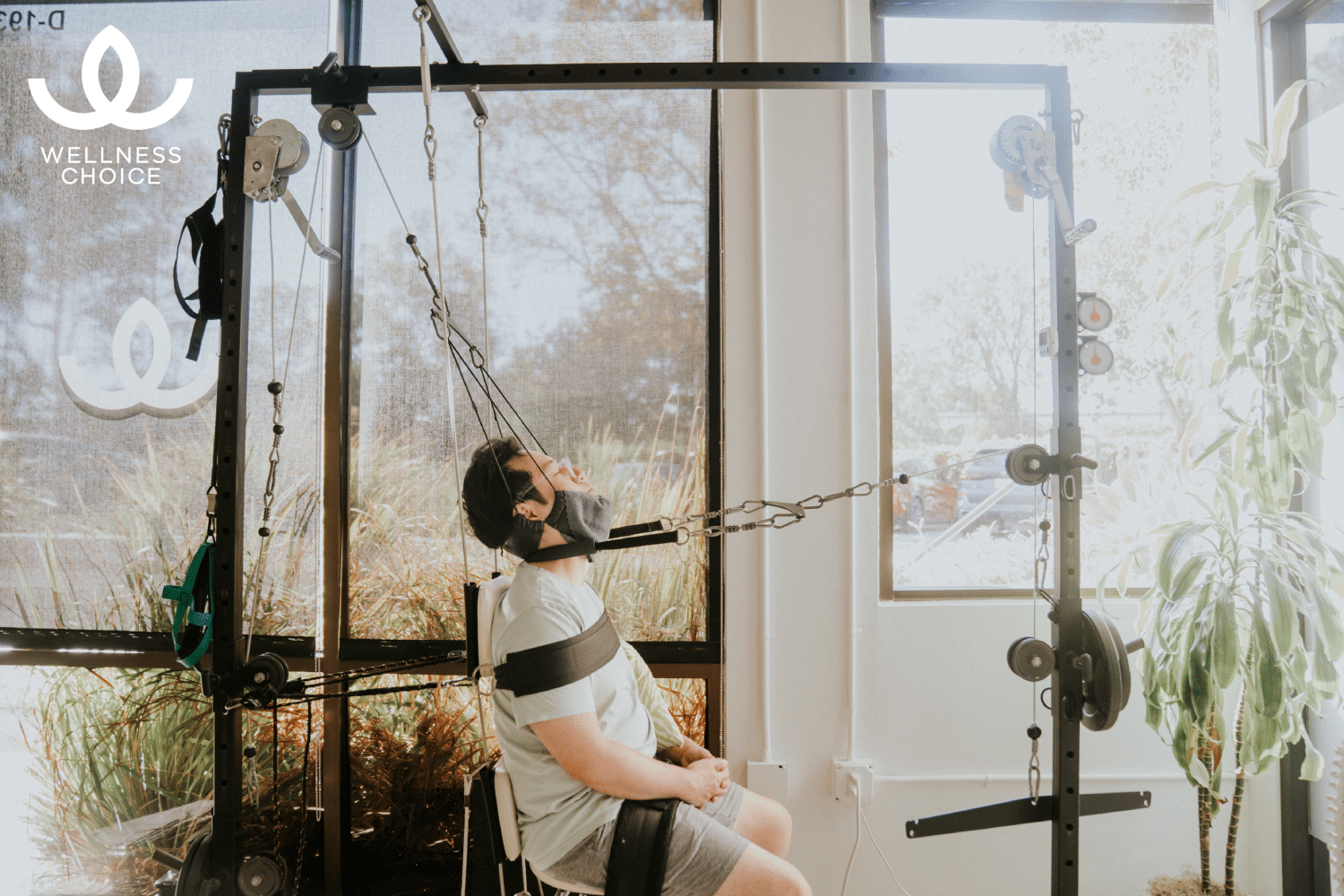
Chiropractic BioPhysics® (CBP®) incorporates spinal biomechanics, alignment assessment, adjustments, corrective exercises, and specialized traction strategies when appropriate.
The purpose of structural corrective methods is to address selected alignment findings in patients for whom this approach is clinically suitable. Changes are not guaranteed, and recommendations should reflect the available evidence and individual response to care.
Customized spinal traction may be considered for selected structural findings after appropriate evaluation and imaging. Traction is not required for every posture correction patient, and the suitability of this approach depends on clinical factors and potential contraindications.
Rehabilitation may include strengthening, mobility exercises, movement retraining, postural endurance, and strategies for managing the physical demands of work and everyday activities.
Exercises and recommendations are adapted to the patient's current abilities, symptoms, goals, and response to care.
Costa Mesa patients may seek posture care because of prolonged computer work, commuting, recreational activities, or physically demanding jobs. These activities can place different demands on the spine and surrounding muscles.
An individualized plan may include reviewing workstation positioning, encouraging comfortable movement variation, improving mobility, and developing exercises that support the patient's normal activities.
For active adults, posture-related goals may also involve movement efficiency, strength, flexibility, and maintaining comfortable participation in exercise or sports.
Some patients primarily want help with neck or back discomfort, while others are concerned about a visible postural change or a specific spinal alignment measurement.
These goals are related but not identical. Pain can improve without a measurable structural change, and changes in alignment do not necessarily correspond directly to changes in symptoms.
Wellness Choice considers the patient's symptoms, functional limitations, structural findings, and goals when discussing the purpose of care and how progress may be assessed.
There is no universal posture correction timeline. The appropriate duration of care depends on the patient's clinical findings, whether the concern is primarily functional or structural, the recommended treatment approach, and the patient's response.
Some patients focus on movement habits and rehabilitation, while others may be candidates for a more structured corrective program. Progress may be evaluated through symptoms, mobility, functional goals, postural observations, and additional measurements when clinically appropriate.
Dr. Lisa Parissi discusses reasonable goals and expectations with each patient rather than promising a specific result or completion date.
Dr. Lisa Parissi, DC, is the owner and lead chiropractor at Wellness Choice in Costa Mesa. Her approach includes Chiropractic BioPhysics® principles, spinal alignment assessment, posture evaluation, and individualized corrective care based on clinical findings.
Dr. Parissi earned a Bachelor of Science in Exercise Physiology from Barry University and a Doctor of Chiropractic degree from Palmer College of Chiropractic Florida.
Learn more about Dr. Lisa Parissi.
Our Costa Mesa chiropractic office provides individualized care for spinal alignment, posture, pain, and mobility. Explore our Costa Mesa chiropractic care and related treatment options.
Wellness Choice provides posture correction at our chiropractic office in Costa Mesa, serving patients from communities throughout Orange County.
Wellness Choice provides posture correction at 150 Paularino Ave Ste D190, Costa Mesa, CA 92626, serving patients throughout Costa Mesa and Orange County. Additional local information and driving directions are available for zip codes 92626 and 92627.
Our Costa Mesa chiropractic office serves local patients as well as people traveling from Newport Beach, Irvine, Huntington Beach, and surrounding Orange County communities.
At our Costa Mesa chiropractic office, posture correction begins with an individualized assessment of spinal alignment, movement, symptoms, and functional concerns. Depending on clinical findings, recommendations may include chiropractic care, Chiropractic BioPhysics® corrective methods, spinal traction when appropriate, and rehabilitation.
Wellness Choice offers posture assessment, individualized corrective chiropractic care, and rehabilitation at our Costa Mesa office. Some patients may experience improvements in selected postural measurements or function, although results depend on their structural findings, flexibility, health history, and response to care.
No. Posture correction considers spinal alignment, biomechanics, muscular control, mobility, and the relationship between posture and everyday function. Treatment is based on individual findings rather than appearance alone.
No. X-rays are recommended when clinically appropriate and expected to influence treatment decisions. At Wellness Choice in Costa Mesa, digital X-rays are required before customized corrective spinal traction is prescribed, but not every patient requires traction.
Timelines vary according to the patient's spinal findings, mobility, symptoms, goals, and recommended care plan. Some patients focus on rehabilitation and movement strategies, while others may participate in a longer corrective program. Progress is evaluated individually.
Full Orthopedic and Neurological Exam, Digital Posture Analysis, MLS Laser treatment, X-Rays, and Doctors report of findings. A $600 Value.
150 Paularino Ave Ste D190
Costa Mesa, CA 92626
Phone: (949) 387-1333
Conveniently located in Costa Mesa, serving patients throughout Orange County.
© All Rights Reserved | Wellness Choice 2026